

decomposing for the spirit
a spiral through samhain: part one

Silence echoes as the Queen of the Underworld sits upon her throne. She has spent the summer in the Above, and now she has come home. The darkness has overtaken the light, and the nights grow long and cold.
Samhain (Sah-wen) marks the beginning of the Celtic new year, for all who understand the natural order, know that life begins in the darkness.

Decomposing as a Ceremonial Act of Restoration
There is a sacredness to the withdrawing of energy into the self, to the process of decomposing and composting with the intention of fertilizing new growth. Without it, our soil becomes dry and void of nutrients, and the garden of life bears little fruit.
Worms. Mushrooms. Bacteria. Vultures greedily circle, ready to devour a decaying carcass, and we cringe in disgust.
There is a kind of terror to it, being torn apart and shat out again. We have a clinging, fearful, desperate grasping to life, to summer, to the sun and warmth, and the false promise of more time.
Yet, despite our resistance, the darkness comes to consume us all.
So, how do we start composting our lives so that we aren’t surrounded by rot and decay? How can we use this time of the year to naturally alchemize the parts of us that have passed on?
Many of us can conceptualize birth, life, death, and rebirth as the guiding themes for being in the great cycle. However, few truly understand, or even see, the importance of the liminal spaces that exist between them. In this space, we are dead but still moving, becoming something new. We aren’t what was, and we aren’t yet what is to be.
Samhain encourages us to embrace the death in our lives. It asks us to look at where we have embalmed that which is dead in an attempt to hold it a little longer. And it asks us to look at where we turn away in disgust from the decaying carcasses within us.
It gives us the opportunity to face the truth of being mortal, in this present moment, which is all we ever truly have.
Attending a Funeral: A Ritual for Composting
First, we must take time to acknowledge death. When was the last time you created a ceremonial space to look at all that has passed in your life?
It’s central for us when a loved one dies, when we lose a job, a friendship, a partnership. Yet, we rarely take time to visit with the many micro deaths that happen within us.
This is where we can lean into ritual, a practice that offers us the opportunity to be in a sacred and intentional ceremony with our own spirit. Creating ritual space can be unique to everyone, but for me, it often looks like…

cultivating soft, warm lighting, often candles | lighting incense or creating connection through smell | dressing in a way that is appropriate to the theme of the ritual | creating silence or ambient sounds or music that generates feelings appropriate to the desired outcome | setting an intention and grounding through deep breaths | drinking tea or incorporating taste to connect me to the ritual intentions | sitting on a soft blanket | moving or touching my body |
Personally, I find ritual space is awakened through my body and my senses. When I come to ritual space, the more devotion I offer to setting, opening, and closing the space, the more I feel I receive from it. However, it doesn’t have to be elaborate, as long as it brings you into presence with your self.
One study on how rituals affect the brain and nervous system actually suggests that rituals have the potential to decrease the brains negative response to failure or mistakes.* With this insight, one could see how beneficial it could be to create devotion in a ritual setting.
When we “die” in some way, we sit with it in ceremony. It reduces our brains stress response to dying and we are able to re-approach the next step with less fear and more resilience.
This is the process of intentionally decomposing. It is wriggling through your inner earth to find what needs to be eaten; it is circling your inner sky to notice where you have dead remnants that need to be cleaned up.
The Ritual: Begin by preparing your ritual space, remembering that your intention is to attend a funeral. Once you have completed your preparations, you may find a comfortable seat and listen to the audio below. It may be helpful to keep a journal close for jotting down anything that comes up for you during the meditation. For extra depth, you could have a container of soil to enhance the sensory experience of this ritual.
You now have the choice to create a funeral that seems right to you. Some cultures bury the dead, some burn them, some give them to the water. There are some that practice “sky burial,” carrying the dead to the peak of a mountain, and leaving them as an offering for the decomposers to do their work.
You could burn the written experiences, scatter the ashes. You could bury them, or wash them away in a bath.
You could take a lesson directly from the decomposers and literally eat it, creating a meal that is representative of the loss you have experienced. Again, neuroscience shows that the more energy you put into ritual experiences, the more you will receive.
Feel free to practice daily digestions so that you avoid an inner build-up of death. You may also choose to practice on the larger scale of your entire life, and visit with the death of your childhood, your adolescence, or any phases of significance to you.
And then…
Once you have done the ritual work of acknowledging that which died within you and you have done the work of processing it, you will naturally begin to shit it out. It may sound ridiculous, but you don’t have to think about evacuating your bowels. It just happens when you are in the right place.
With the right steps, you will experience clean and easy movements in your life. You will be in situations that once created death, and find that rich fertilizer flows from you, enhancing the soil rather than depleting it.
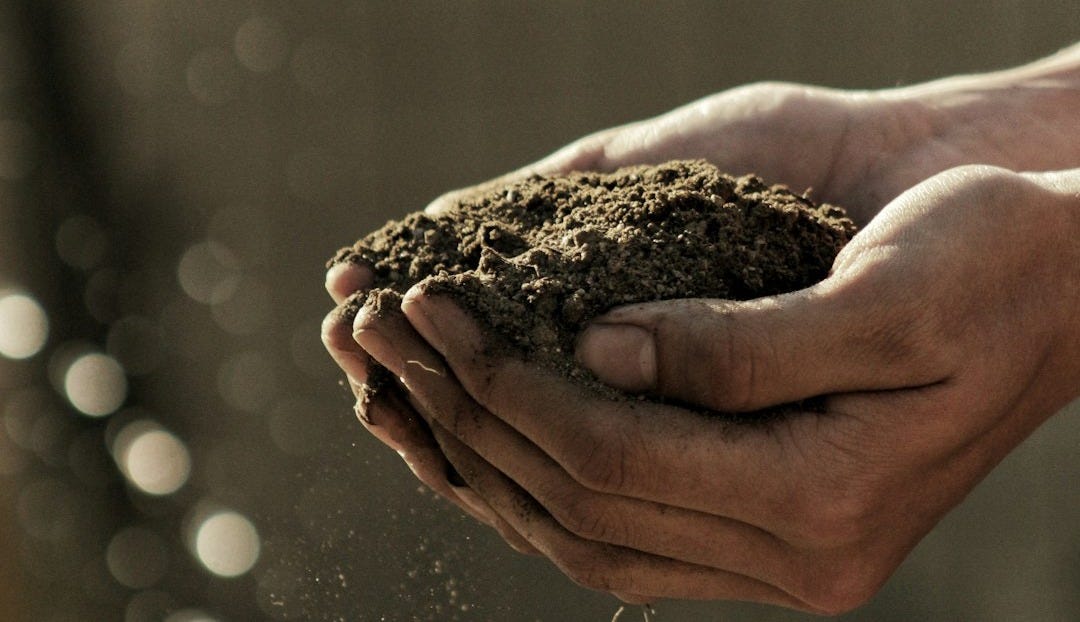
At this point you’ve laid the groundwork for fertile growth, now you let your soil rest. Let time integrate the minerals and nutrients that you have formed through the digestion of the past.
One final thought: alongside the neuroscience behind rituals, there is also research that shows self-celebration can significantly boost “feel-good” hormones like dopamine while reducing “feel-bad” hormones like cortisol; overall enhancing one’s response to challenges.**
Take a moment to have a celebration of life, cheering yourself on for taking on the challenge of facing your inner deaths. Make a small list, at least 3 things, of the ways you feel proud of yourself for overcoming whatever experiences came up for you.
Embracing the liminal space between death and rebirth aligns us with our inner sovereignty. We become the ruler of our Underworld, rather than a captive to it.
As you reflect on your own experiences, remember that honoring what has passed is a courageous and necessary step toward finding what comes next.
I hope you feel inspired to dedicate time to your own rituals moving forward—whether grand or simple—and allow the fertile soil of your past to nurture the vibrant garden of your future.
Happy decomposing!
Sit upon your throne, though you may be alone, and know your own power. Don’t forget to look back on the hour. The life that you lived longs to be seen, the value of death holds a greater theme. Decay is the beautiful return to the soil. Untended death, a life doth spoil.
Sources:
*Hobson et al. (2017), Rituals decrease the neural response to performance failure. PeerJ 5:e3363; DOI 10.7717/peerj.3363
**Wang, W., Li, J., Sun, G. et al. Achievement goals and life satisfaction: the mediating role of perception of successful agency and the moderating role of emotion reappraisal. Psicol. Refl. Crít. 30, 25 (2017). https://doi.org/10.1186/s41155-017-0078-4